Materials
Testing gold at home: what works and what is a myth
Magnets, vinegar, biting, flames: which tests are usable, which are useless or harmful, and which belong with a professional. With a home density test you can do yourself.
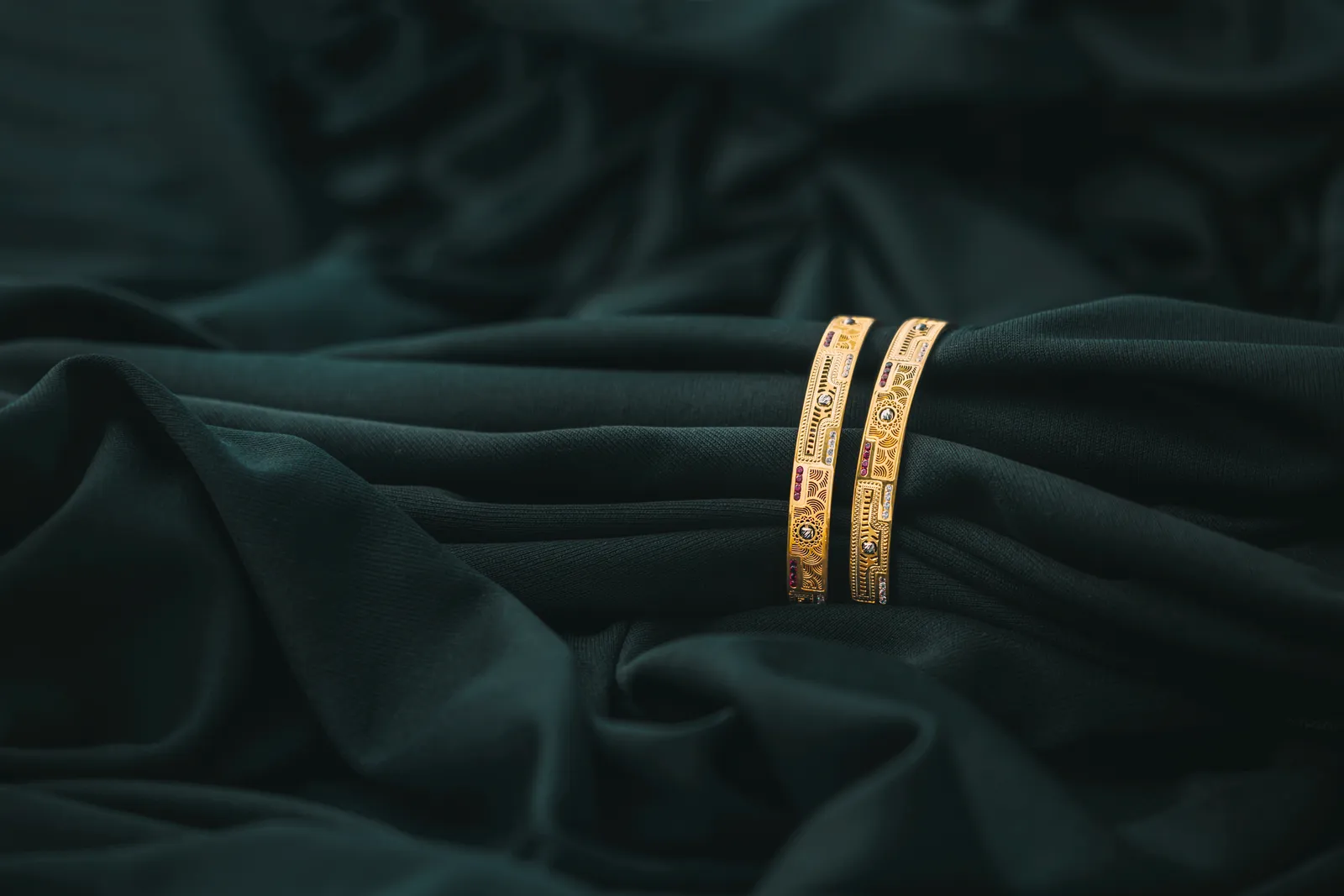
Bite it, drip vinegar on it, hold it over a flame, bring a magnet close — every family has its own handed-down way of “testing gold”. A few are useful if you understand their limits. Most of the rest tell you nothing, and some will damage the piece. This guide puts each method where it belongs: usable, best avoided, or best left to a professional.
First: what does “real gold” mean?
Jewelry is not made of pure gold. 18K is 75% gold, 14K about 58.3%, 10K about 41.7% — all of them real gold. So the right question is not “is it gold” but two questions:
- Is the piece solid gold alloy, or just a layer of gold on the outside?
- Is the karat what it is claimed to be?
Home tests can partly answer the first. The second almost always needs professional equipment.
What you can do yourself
1. Read the stamp
Look inside rings, near chain clasps, on the back of pendants:
- 750, 585, 416 or 18K, 14K, 10K: karat marks.
- GP, GEP, HGE, RGP: forms of gold plating — a very thin layer of gold over another metal.
- GF: gold-filled — a thicker layer than plating, but still only a layer.
- 925: silver. Gold-plated silver is still silver.
The limit: a stamp is the seller’s own declaration, and stamps can be faked. A stamp is not proof; no stamp at all is a reason to ask careful questions.
2. The magnet test
Gold is not attracted to a magnet. If the whole piece is pulled strongly, there is iron or steel inside.
The limits run both ways:
- Not attracted does not mean gold. Copper, zinc, aluminum, silver and many alloys used for fakes are non-magnetic too.
- A slight pull at the clasp does not mean fake. The tiny spring inside a chain clasp is usually steel, even on a real gold chain.
A magnet does one thing only: it quickly rules out the crudest fakes.
3. Look closely at worn spots
Under good light, examine the places that rub most: the edges of a ring, the inside, the links by the clasp, the sharp edges of a pendant. If a different metal color shows through — gray-white or coppery red — the piece is plated.
Note: white gold showing a warm off-white where its rhodium has worn is normal, not a sign of plating.
4. Measure the density
This is the only home method that gives you a number. Gold is far denser than the metals usually used to fake it.
How to do it, with a pocket scale accurate to 0.01 grams:
- Weigh the dry piece. Call this A.
- Put a cup of water on the scale and tare it to zero.
- Hang the piece from a fine thread and submerge it completely, without touching the bottom or sides. The scale reading is B.
- Density = A ÷ B.
Compare with these reference ranges, in g/cm³:
- 24K gold: about 19.3
- 18K gold: about 15.2 – 15.9
- 14K gold: about 12.9 – 14.6
- 10K gold: about 11.3 – 11.7
- Silver: about 10.5
- Copper, brass: about 8.4 – 8.9
An important limit: this only works on plain, solid pieces. Gemstones, hollow interiors, a lattice backing or air bubbles on the surface all throw the figure off. On a ring set with many stones, the result means nothing.
What not to do
Biting
Images of athletes biting medals have convinced many people that real gold takes a tooth mark. 10K to 18K jewelry gold is hard enough not to dent, while gold-plated lead is very soft. The test distinguishes nothing, and can chip a tooth or mark the piece.
Vinegar, toothpaste, bleach
Vinegar is too weak to react visibly with most metals in a short time, so “no color change” proves nothing. Toothpaste is an abrasive and scratches the surface. Bleach contains chlorine, which can damage real gold alloys.
The ceramic scratch test
This asks you to drag the piece across unglazed ceramic and look at the color of the streak. It scratches the piece, and thick plating still leaves a gold streak.
Holding it over a flame
Dangerous, and it can crack gemstones and damage solder joints and rhodium finishes. Whether it discolors or not tells you nothing about karat either.
Dropping it in water to see if it floats
Every metal used in jewelry sinks. This test rules out no fake at all.
Checking for marks on the skin
Green or black marks on skin come from alloying metals reacting with sweat, cosmetics and lotion. Real low-karat gold can leave marks on some people; fresh plating may leave none. It is not evidence either way.
What to leave to a professional
The acid test on a touchstone
A jeweler rubs the piece lightly on a black stone, then applies acid solutions matched to different karats to the streak. Whether the streak stays or dissolves indicates the karat range.
It is an old and fairly reliable method, but it removes a little metal and uses strong acid. Do not try it at home.
X-ray fluorescence (XRF)
The instrument shines X-rays at the surface and reads out the percentage of each metal — gold, silver, copper, zinc, nickel — in tens of seconds, without harming the piece. It is also the non-destructive method named in Vietnam’s regulation on gold jewelry quality (Circular 22/2013/TT-BKHCN), and the most common check in gold shops today.
One thing to know: it measures the surface layer. On heavily plated pieces, an experienced operator will measure a worn spot or several points.
Fire assay
The most accurate way to determine gold content, but part of the sample has to be melted. It is used only when a definitive result is required.
Solid gold, gold-filled and plated: the difference
- Solid gold alloy (10K, 14K, 18K): the same alloy all the way through. However far it wears, it is still gold, and it can be repolished many times.
- Gold-filled: a thick layer of gold bonded to a core of another metal. More durable than plating, but the core is not gold.
- Gold-plated: a very thin layer applied by electroplating. It wears quickly where it rubs and cannot be repolished.
- Gold-plated silver: the core is silver.
Gold weight and material value only carry their full meaning for the first.
The surest way: check at the time of purchase
Testing at home is what you do when the origin is already uncertain. For a piece you are about to buy, there are far better options:
- An invoice that states the karat and the gold weight.
- A karat stamp on the piece that matches the invoice.
- An XRF reading taken in front of you, if the seller has the instrument.
- The piece weighed in front of you.
What to ask when buying remotely is covered in Buying fine jewelry online: 8 things to check before you pay.
Frequently asked questions
Does real gold tarnish?
Pure gold does not. Low-karat alloys can dull slightly at the surface because of the metals mixed in, and brighten again when refinished. Slight dulling does not mean fake.
Is real gold attracted to a magnet?
No. But a piece that is not attracted is not necessarily gold.
What if the piece has no stamp at all?
The stamp may have worn away, or the piece may be too small to carry one. Have it measured by XRF to be sure.
What about testing gemstones?
That is a different job entirely, requiring a tester and a certificate. See How to read a gemstone certificate.
At T Gold
T Gold crafts in 10K, 14K and 18K gold and does not use plated gold. The karat and gold weight are stated for every piece. The karats are explained in 10K, 14K or 18K: how to choose your gold karat and on the Materials & certification page.