Buying guides
Choosing wedding bands as a pair: width, thickness, finish and engraving
A wedding band is worn every day for years, so comfort and durability come before style. A guide to width, thickness, profile, finish, gemstones and engraving.
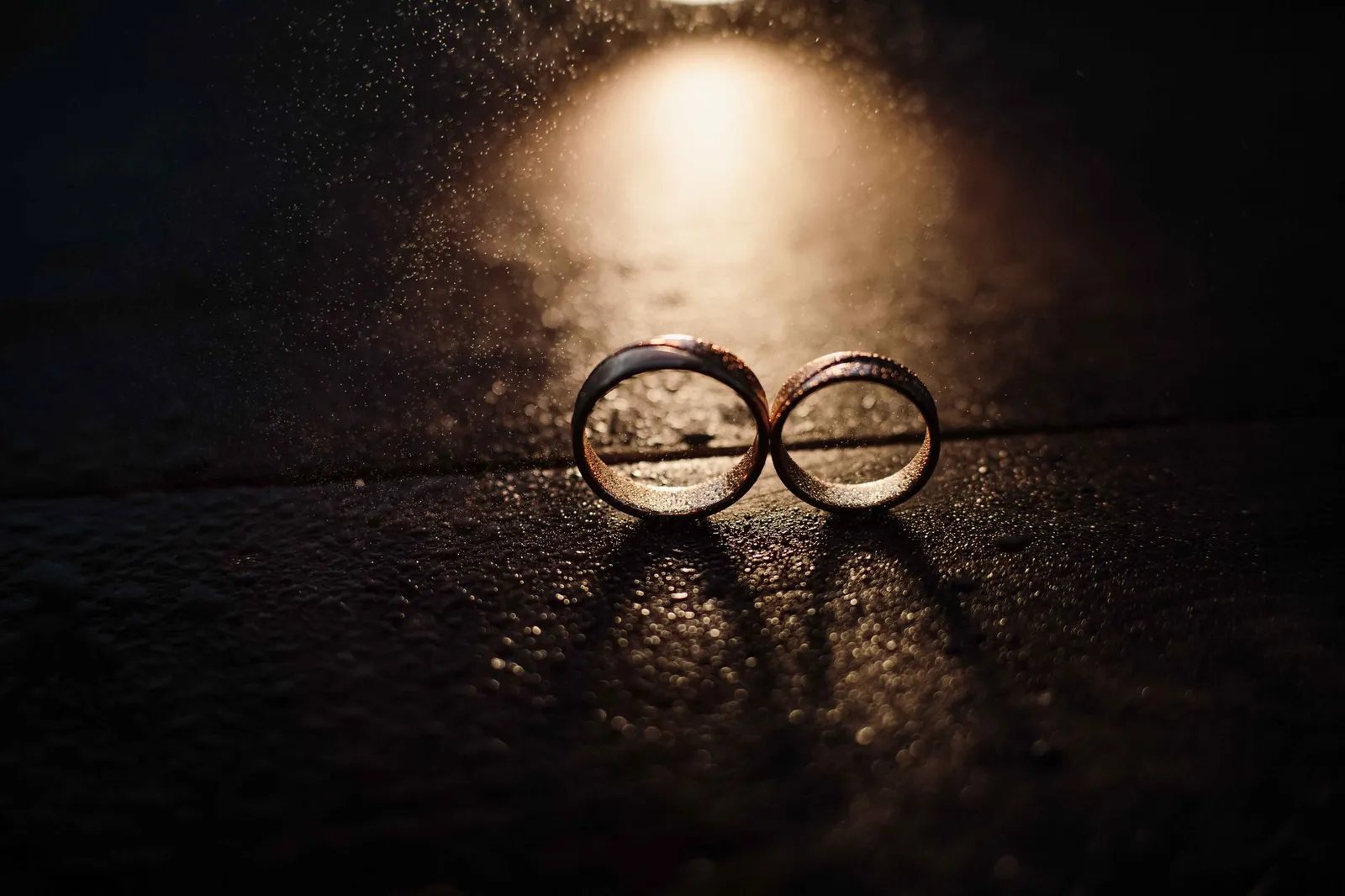
A wedding band is the piece of jewelry worn most in a lifetime: every day, for years, through every kind of work. So the order of priorities is different from other pieces — comfort and durability first, style second. This guide goes through each decision, from the width of the band to the words engraved inside.
Do the two rings have to match?
No. Two people rarely share the same hands, work and taste, so forcing identical rings usually means one person compromises. The common approach today is to keep one connecting thread and leave the rest free:
- The same gold color, different widths.
- The same profile, one plain and one set with stones.
- One shared detail: a groove, a milgrain edge, a finish.
- Entirely different outside, with the same engraving inside.
Width
Width is the decision that most affects how a band feels.
- Women’s bands: most commonly 2–3 mm. Under 2 mm is very fine but slight; from 3 mm the ring has real presence.
- Men’s bands: most commonly 4–6 mm. 4 mm is neat and discreet; 6 mm is substantial and masculine.
A few principles:
- By finger. Slender or shorter fingers suit narrower bands; longer fingers or larger knuckles balance a wider one.
- By habit. Someone who has never worn a ring is usually more comfortable with a narrower, thinner band.
- By engagement ring. If the two are worn on the same finger, consider their combined width.
- Wide bands fit tighter. At the same size, a wider band grips more of the finger and usually needs a little extra room.
Thickness
Thickness is the metal from the inside of the band to its outer surface. A thin band is light and less noticeable when you make a fist, but bends more easily under impact. A thick band feels substantial, holds its shape, and is a requirement if you want stones flush-set into it.
For daily wear, about 1.5–2 mm is the usual range. Try making a tight fist with the ring on: if it presses between the fingers, the band is too thick or its edges too square for your hand.
Profile
Slice across a band and you see its profile — which decides how it catches light and how it sits on the finger.
- Domed: an evenly curved outer surface. The most classic profile, comfortable, and forgiving of scratches.
- Flat: a flat outer surface with modern lines. Shows scratches more clearly, and the edges can press slightly if not softened.
- Flat with rounded edges: flat in the middle, rounded at the edges — a balance of the two.
- Beveled: a flat top with angled edges that catch light in planes.
- Knife-edge: two angled faces meeting in a ridge at the center, making the band look finer than its actual width.
Beyond the outside, ask about the inside: a gently curved interior makes the ring easier to put on and take off and more comfortable, especially on wide bands.
Finish
- High polish: the brightest and most familiar. It also shows scratches soonest; repolishing makes it new again.
- Matte: soft, modern, and good at hiding small scratches. Over time the areas that rub most slowly turn shinier — the matte finish can be reapplied.
- Brushed: fine, deliberate parallel lines; halfway between polished and matte.
- Combined: matte center with polished edges, or the reverse — depth without extra detail.
Patterns such as a center groove, milgrain edges, fluting or a hammered texture are both accents and a way to disguise everyday scratches. A hammered surface is especially easy to live with: new marks almost disappear into the texture.
No finish stays untouched forever. A ring worn daily will show its history, and every finish can be renewed.
Gold color and karat
- Yellow gold: traditional, no plating needed, the easiest to refinish.
- White gold: modern, well suited to diamonds; needs periodic rhodium replating to stay bright white.
- Rose gold: warm, flattering on many skin tones.
- Two-tone on a single ring — the body in one color, the edges or a center band in another — lets two rings in different colors share something.
On karat, 18K has a deeper color, a more substantial feel and is kinder to sensitive skin; 14K is harder, more scratch-resistant and lighter on cost. The full comparison is in 10K, 14K or 18K: how to choose your gold karat.
Gemstones on a wedding band
A wedding band takes more knocks than any other piece, so the setting matters more than the size of the stones.
- Flush-set: the stone sits level with the gold and is almost impossible to catch. The most durable choice, and ideal for men’s bands.
- Channel-set: a row of stones between two walls of metal, smooth and safe.
- Half pavé: stones across the top half of the ring. Bright, and still resizable through the lower half.
- Full eternity: beautiful from every angle, but all but impossible to resize, and the stones underneath take constant contact. Choose it only when you are sure of the size.
- Hidden stones inside the band: a small row on the inside that only the wearer knows about.
Each technique is explained in Gemstone settings.
Engraving inside the band
The most private part of the ring. Common choices:
- The couple’s names or initials.
- The wedding date, or the day you met.
- A short phrase only the two of you understand.
- The coordinates of a place that matters.
Some practical notes:
- Short is clear. The inside of a ring is small; the shorter the text, the larger and more legible the engraving.
- Settle the size before engraving. Significant resizing later can affect the lettering.
- Narrow bands limit the height of the letters; a slim women’s band calls for shorter text than a men’s band.
Size and fit
A wedding band is rarely taken off, so fit matters more than for any other piece.
- Measure at the end of the day, with warm hands, and more than once — the method is in How to measure ring, chain and bracelet size at home.
- Try a ring of similar width to the one you plan to order.
- Fingers change with the seasons and over the years. A design that can be resized is valuable insurance.
Wearing it with an engagement ring
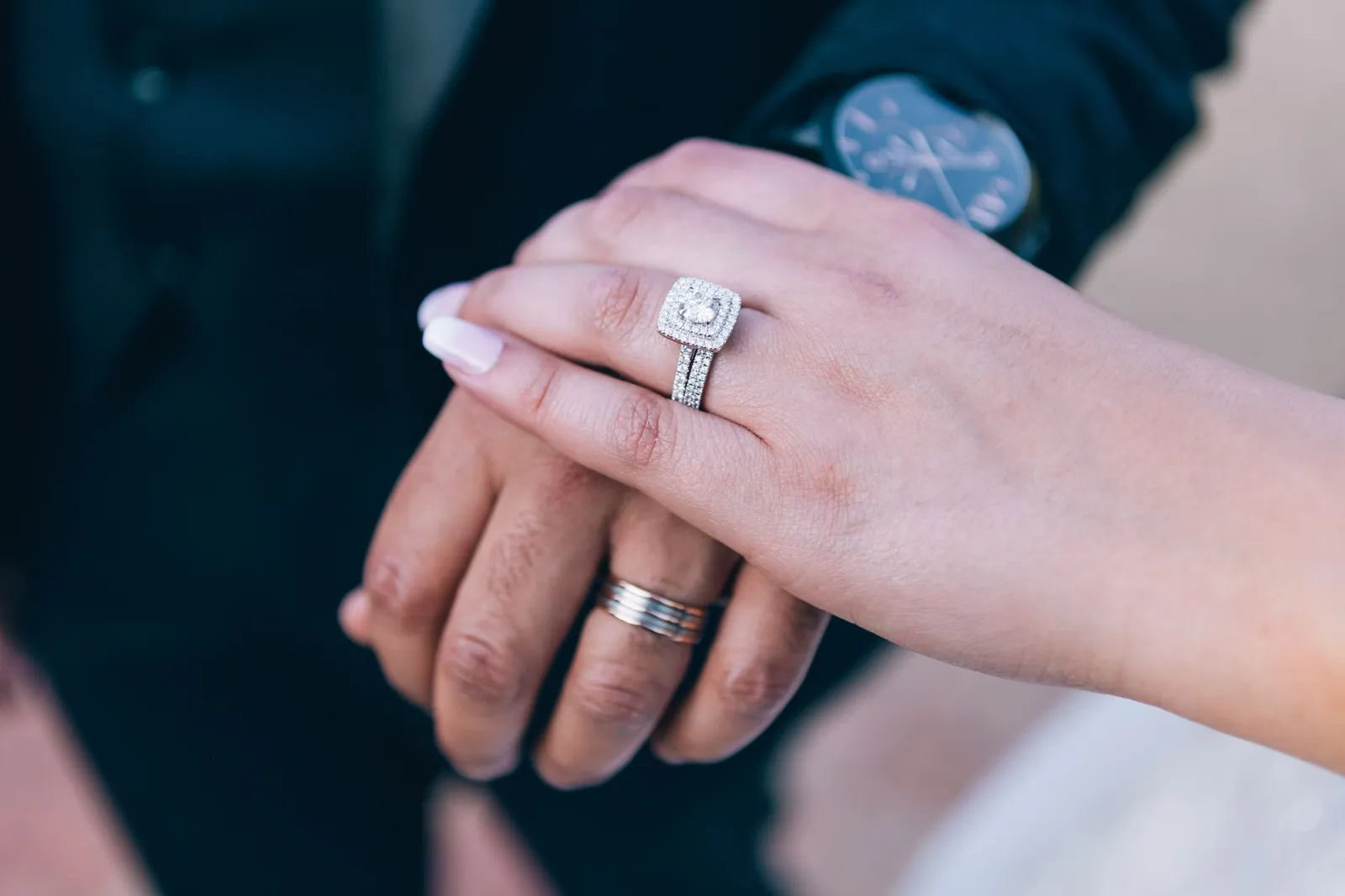
If the bride will wear both on one finger, bring the engagement ring when choosing the band.
- Will they sit flush? A low setting or a large halo can push the band away and leave a gap. A curved or V-shaped band that follows the center stone solves this.
- The same gold color and karat make the two read as a set and wear evenly where they rub.
- Similar thickness lets them sit level side by side.
When to order
Earlier than you think. Made-to-order rings need time for design, crafting, fitting and any adjustment, and wedding season is when workshops are busiest. Ask for the specific timeline for your design at the first consultation, and leave a margin before the wedding day.
Design your wedding bands in 3D at T Gold
On the Custom page, T Gold’s wedding band design tool (currently in Vietnamese) lets you build each ring separately and view the pair together:
- Women’s widths from 1.5 to 4 mm, men’s from 4 to 6 mm, three thickness levels.
- Many profiles, from domed, flat and beveled to knife-edge and twisted forms.
- High polish, matte, brushed or combined finishes, with patterns such as grooves, milgrain, fluting and hammered texture.
- Many stone-setting styles, a hidden row of stones and engraving inside the band — one line per ring, up to 20 characters — previewed on the model.
The finished design can be sent straight to T Gold for further advice on karat and ring size.
Seven things to settle before ordering
- The width and thickness of each ring?
- The profile, and is the inside curved?
- Polished, matte or a combination?
- Gold color and karat?
- Stones or not, which setting, and can it be resized?
- What to engrave inside?
- Each person’s size, measured in millimeters.
Once you have the answers — or if any of them is still open — book a consultation to try widths and finishes on your own hands.