Buying guides
Choosing jewelry as a gift when you don’t know their size or taste
Five things to notice about the recipient, what is easiest to give without a size, ideas by person and occasion, personalization and six questions before ordering.
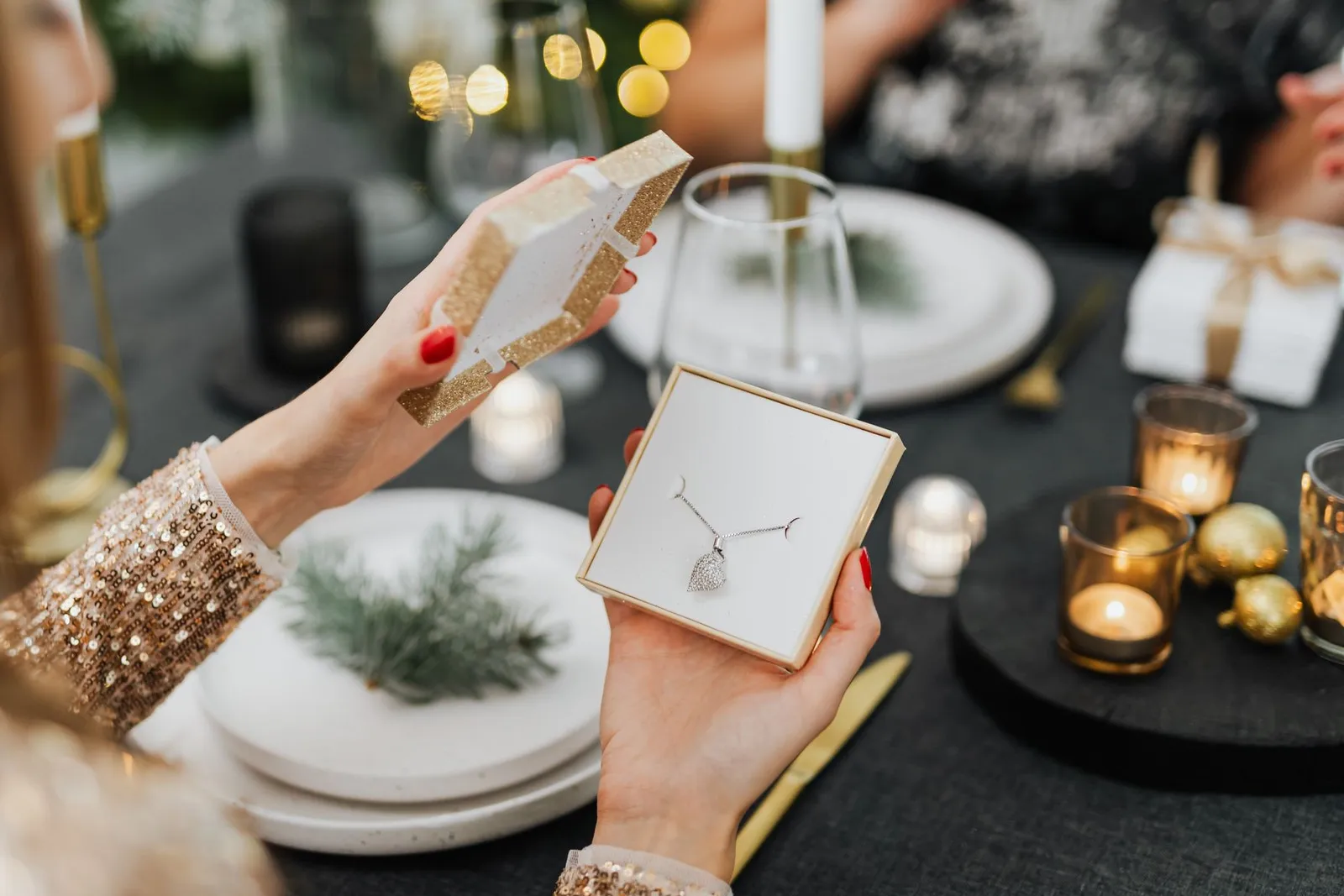
Giving jewelry means giving something the other person will wear, so a wrong choice shows more than with any other gift: it does not fit, it does not suit them, or it duplicates something they already own. The good news is that most of that risk disappears with a few simple observations and a sensible order of choices.
Start with the person, not the piece
Before opening the collection, spend a few days noticing five things:
- The metal color they wear. Watch, rings, belt buckle — yellow, white or rose? People who wear white tones rarely switch to yellow, and the reverse.
- How bold they go. Small and discreet, or pieces with real presence?
- What they wear every day. That is what they actually use, as opposed to what they merely own.
- Work and habits. Someone who works with their hands or trains often will suit neat pieces that do not catch.
- What they already have. To avoid duplicates — or to give something that completes it: a chain for the pendant they own, a bracelet for the watch they always wear.
If you can, save a photo of them wearing jewelry. A specialist reads taste from a photo far faster than from a description.
What is easiest to give without knowing the size?
Ranked by size risk, from easiest to hardest:
- Chains and pendants. Almost no size risk. A length of 50–55 cm suits most men; 40–45 cm suits most women.
- Earrings. No size needed. You only need to know whether their ears are pierced.
- Link bracelets. Links can be added or removed, and a centimeter either way still wears fine.
- Rigid bangles. They depend on the width of the hand, which is harder to guess.
- Rings. The hardest: half a size off is already uncomfortable, and every finger is different.
If this is the first time you are giving jewelry to someone, the first three groups are the safe choices.
Ideas by recipient
For him
- A plain chain or tennis chain: a foundation piece almost anyone can wear, alone or with a pendant.
- An initial or symbol pendant: personal, with no size to worry about.
- A bracelet: a natural match for someone who already wears a watch.
- A men’s ring: only when you know the size, or when you choose it together.
For her
- A single-stone pendant: classic and wearable every day.
- Single-stone earrings: the easiest of all to get right.
- A tennis bracelet: a gift with clear presence that still looks refined.
For parents
Favor pieces that can be worn daily, feel secure and are easy to put on and take off: a chain with a larger, easy clasp, or a medium-width ring with flush or bezel settings that do not catch.
For yourself
A milestone you reached by yourself deserves a piece to mark it. Since you know your own size and taste, this is the moment for the pieces that are hardest to give: a bold ring, or a Custom design from scratch.
Ideas by occasion
- Birthday: something personal — an initial, a name, a number, a private symbol.
- Anniversary: a piece that can be engraved with a date, or one that goes with last year’s gift.
- Graduation, promotion, opening a business: a piece that marks achievement — a chain, a ring, a pendant with a strong form.
- Proposal: see Choosing an engagement ring: center stone shapes and settings.
- Wedding: see Choosing wedding bands as a pair.
Personalization: what makes a gift unmistakable
A beautiful piece of jewelry can be bought in many places. A piece carrying the recipient’s initial, name or date belongs to one person only.
- An initial or name pendant.
- An engraving inside a ring or on the back of a pendant.
- A number or symbol tied to a shared memory.
On the Custom page, T Gold’s pendant design tool (currently in Vietnamese) lets you try an initial, name or symbol pendant and preview it in 3D.
If you still want to give a ring
- Measure discreetly: borrow a ring they wear on that finger and measure its inside diameter. The method is in How to measure ring, chain and bracelet size at home.
- Choose a design that can be resized: avoid rings set with stones all the way around.
- Ask in advance about resizing after the gift, so a miss can still be fixed.
- Or give the experience of choosing: visit the showroom together and let them try rings on.
Dividing the budget
The price of a piece comes from three parts: gold, gemstones and craftsmanship. For the same budget, prioritize what the recipient values:
- A large, bold piece: choose Moissanite and put the budget into form and gold weight.
- A real diamond: Lab Diamond gives more size than natural diamond for the same spend.
- Lasting material value: prioritize karat and gold weight.
One principle worth keeping: tell the recipient what the gemstone is. A beautiful Moissanite piece is a beautiful gift; letting someone believe it is a diamond and find out later is what spoils it.
Allow enough time
Ready-made designs are faster than made-to-order ones. At T Gold, for eligible orders, completion takes around 5–7 days; Custom designs need extra time to build and approve the 3D model. If the gift is tied to a specific day, get in touch early and state the date so the options can be planned around it.
The papers that go with the gift
The box, the invoice, the specification card and the certificate are part of the gift. They tell the recipient exactly what they are wearing, and they are needed for warranty, resizing or exchange later. Hand them over, or keep them somewhere the recipient knows about.
Six questions to answer before ordering
- Which metal tone does the recipient wear?
- Could they wear this piece every day?
- Does it need a size, and if so, are you sure of it?
- What is the gemstone, and how will you describe it to them?
- Will it be ready in time?
- If it does not fit or suit them, what are the resizing and exchange terms?
At T Gold
Send T Gold your budget, the occasion and a photo of the recipient wearing jewelry — a specialist will suggest a few options with karat, gemstone and specifications clearly stated. Browse the collection, see how to order or book a consultation.